• About
  • Projects
  • Customization
  • Contact

Why DMX512 LED neon is the default choice for large architectural lighting

Why DMX512 LED neon is the default choice for large architectural lighting

SPI gives you pixels. DMX gives you a system that still works in year ten. Here is how to choose between them on a real façade project.

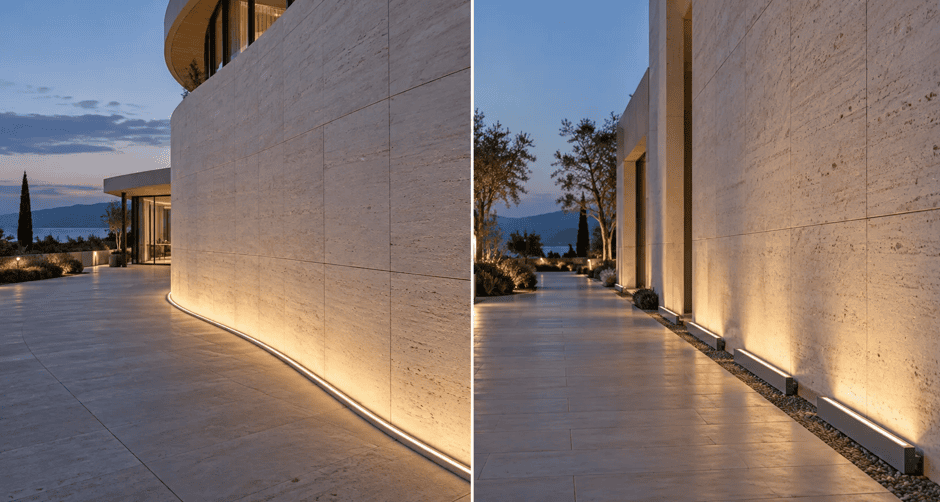
Static facade lighting is mostly gone. Hotels, shopping centers, bridges, and civic landmarks now run programmed schemes that shift with the season, the event, or the hour. Once a project reaches that scale, two control options come up in nearly every specification meeting: DMX512 and SPI addressable control.

Both drive RGB and RGBW LED neon. They were built for different jobs.

SPI gives you pixel-level resolution. DMX gives you a standardized control network that survives contact with a real building site. Arguing over which one makes prettier effects misses the point. The question worth asking is what happens after several thousand meters of neon are mounted, wired, and handed over. Which system can the maintenance team still commission, troubleshoot, and extend in year ten?

That is usually where DMX wins.

dmx512 control for architectural lighting

What DMX512 actually is

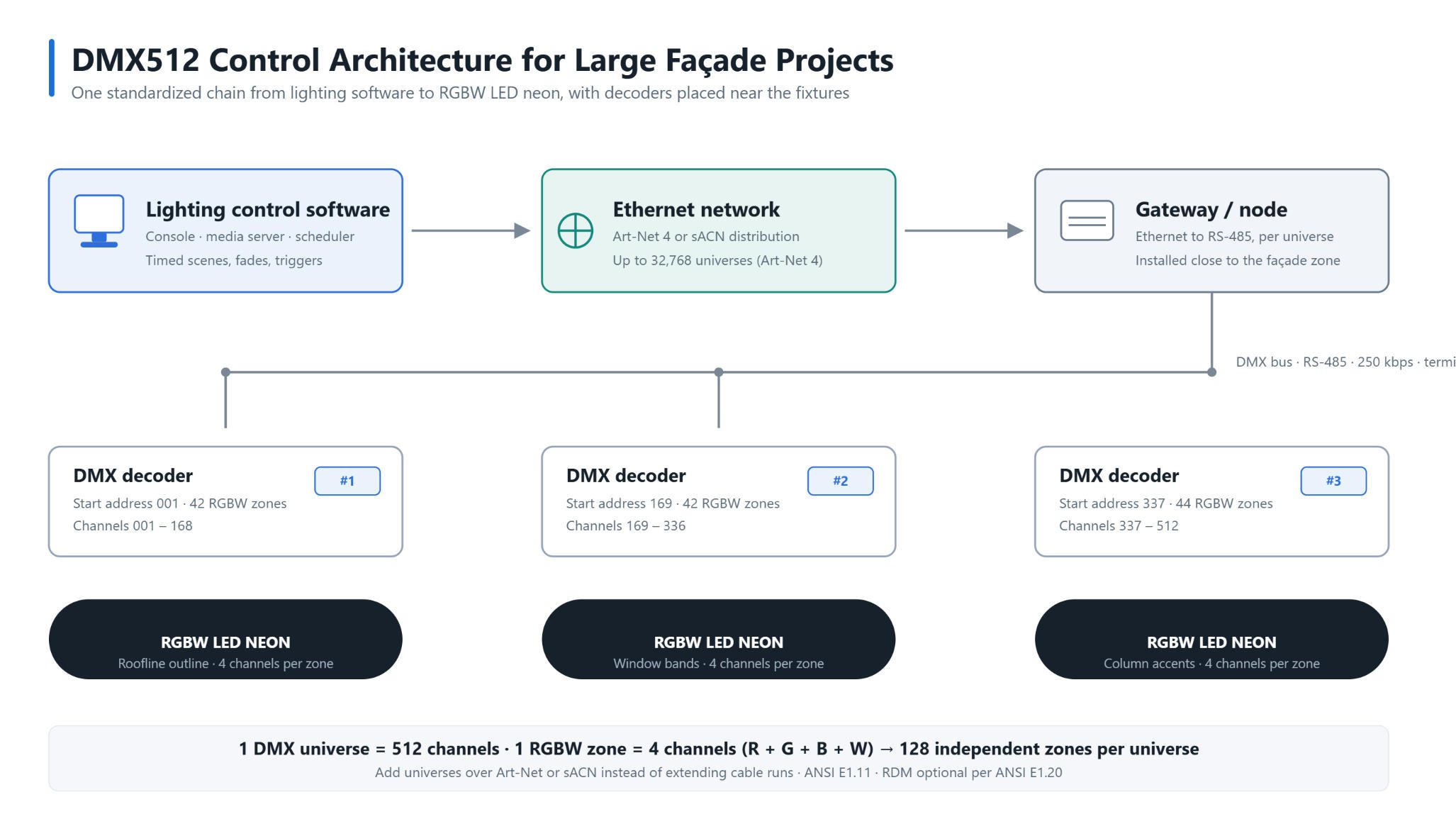
DMX512 started in stage lighting and moved into architectural work: facades, landscapes, bridges, media installations. One DMX universe carries 512 channels, each holding an 8-bit value from 0 to 255.

An RGBW neon zone needs four channels, one each for red, green, blue, and white. One universe therefore handles up to 128 independent RGBW zones, assuming nothing else is mapped into it.

The protocol is standardized as ANSI E1.11 and runs on an RS-485 physical layer at 250 kbps. Because it is an open standard rather than one company’s format, controllers, decoders, gateways, fixtures, and software from different suppliers can run inside the same system. LIGMAN’s DMX/RDM overview is a decent technical starting point.

Why large projects end up on DMX

Too many parties need a shared language

A facade job pulls in the lighting designer, facade consultant, electrical contractor, system integrator, fixture manufacturer, software supplier, and the operator who inherits the whole thing. DMX gives them one reference point.

It also means the building is not married to a single chipset or a single small controller brand. When a decoder or gateway fails in year seven, compatible replacements from other manufacturers are normally available. On a building expected to run for a decade or longer, that counts for more than any individual effect.

It handles distributed wiring better than SPI

Facade lighting is never in one place. Runs sit across floors, columns, rooflines, window bands, and separate wings.

DMX transmits differentially, which behaves far better over the distances involved than the short single-ended data links used by most SPI products. With proper cable, termination, optical isolation, splitters, repeaters, and topology, DMX can be distributed across facade zones while holding up against interference from lifts, motors, switch-mode power supplies, and long parallel power runs, plus outdoor moisture and temperature swings.

None of this makes those problems disappear. It gives you a proper toolkit for managing them.

Zoning is usually what the design actually needs

Most architectural schemes never ask for per-LED control. They ask for a window band, a floor line, a column, a group of neon runs, or one architectural feature.

DMX fits that shape. Each fixture or decoder takes a start address, and the controller drives the building as one coordinated scheme: evening white, weekend color, national-day palettes, slow gradients, event sequences, late-night dimming. You get a moving facade without building a pixel system you will never use.

It plugs into professional software without custom work

Consoles, architectural controllers, media servers, show-control platforms, and programming packages all speak DMX. Schedules, fades, music sync, sensor triggers, and building-wide timings are standard tasks, not development projects.

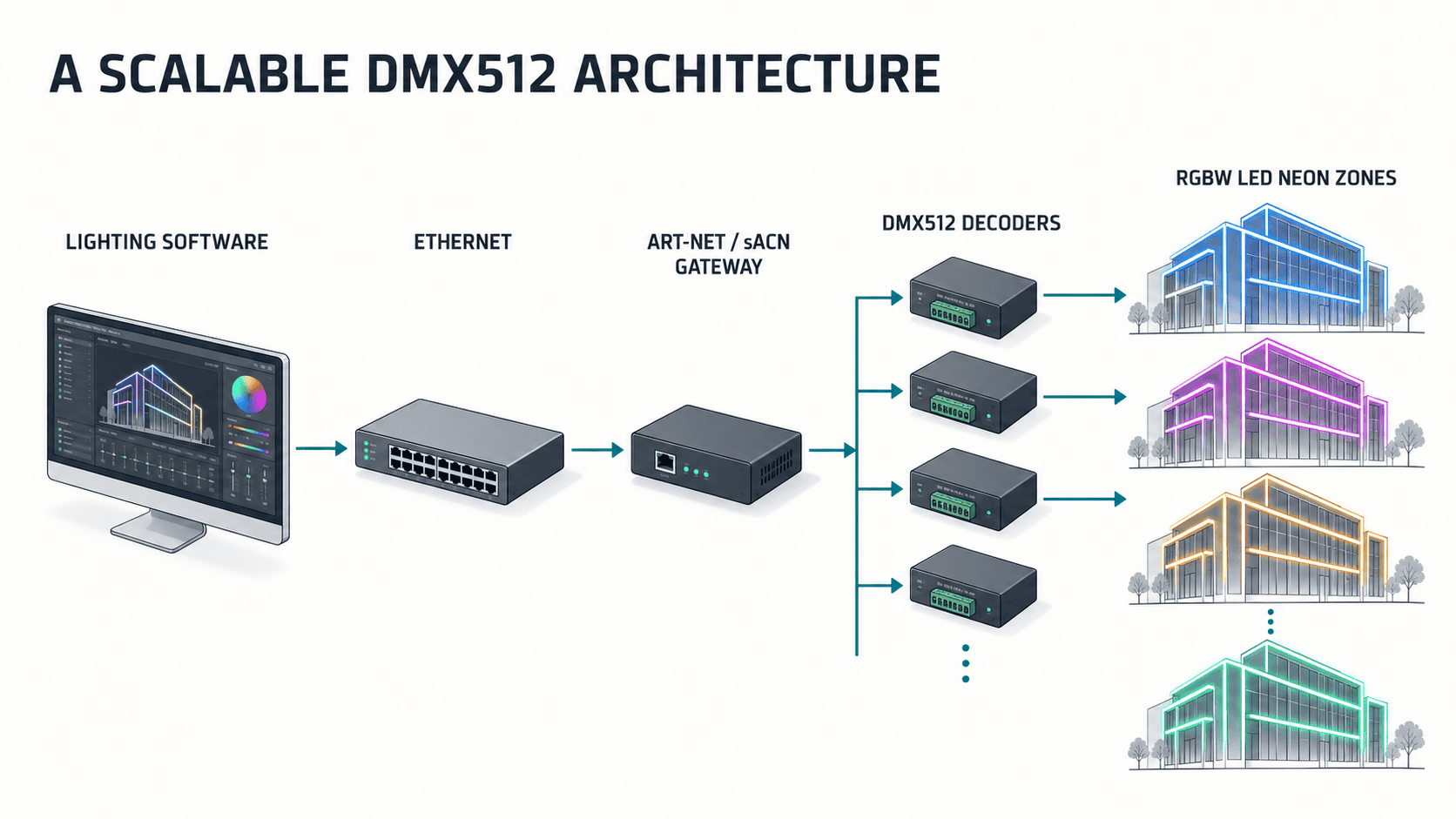
For large sites, multiple universes travel over Ethernet as Art-Net or sACN. Art-Net 4 can address up to 32,768 universes in theory, though real capacity depends on network bandwidth, hardware, and how the system is laid out. The official Art-Net specification explains how Ethernet gateways hand individual universes off to field devices.

Lighting software → Ethernet → Art-Net or sACN gateway → DMX decoder → RGBW LED neon

Gateways and decoders sit near the fixtures, so you are not dragging every control cable back to one rack.

Commissioning and servicing stay manageable

Every large system eventually needs testing, repair, or a change of scheme. DMX addressing gives installers a straightforward way to walk the building: trigger one address at a time and confirm fixture location, wiring, RGBW channel order, dimming response, and scene assignment.

With RDM-compatible equipment you also get two-way functions such as remote addressing, device discovery, status reporting, and some configuration changes. RDM is standardized separately as ANSI E1.20 and runs alongside DMX512. Not every DMX product supports RDM, so confirm it at specification stage instead of discovering it on site.
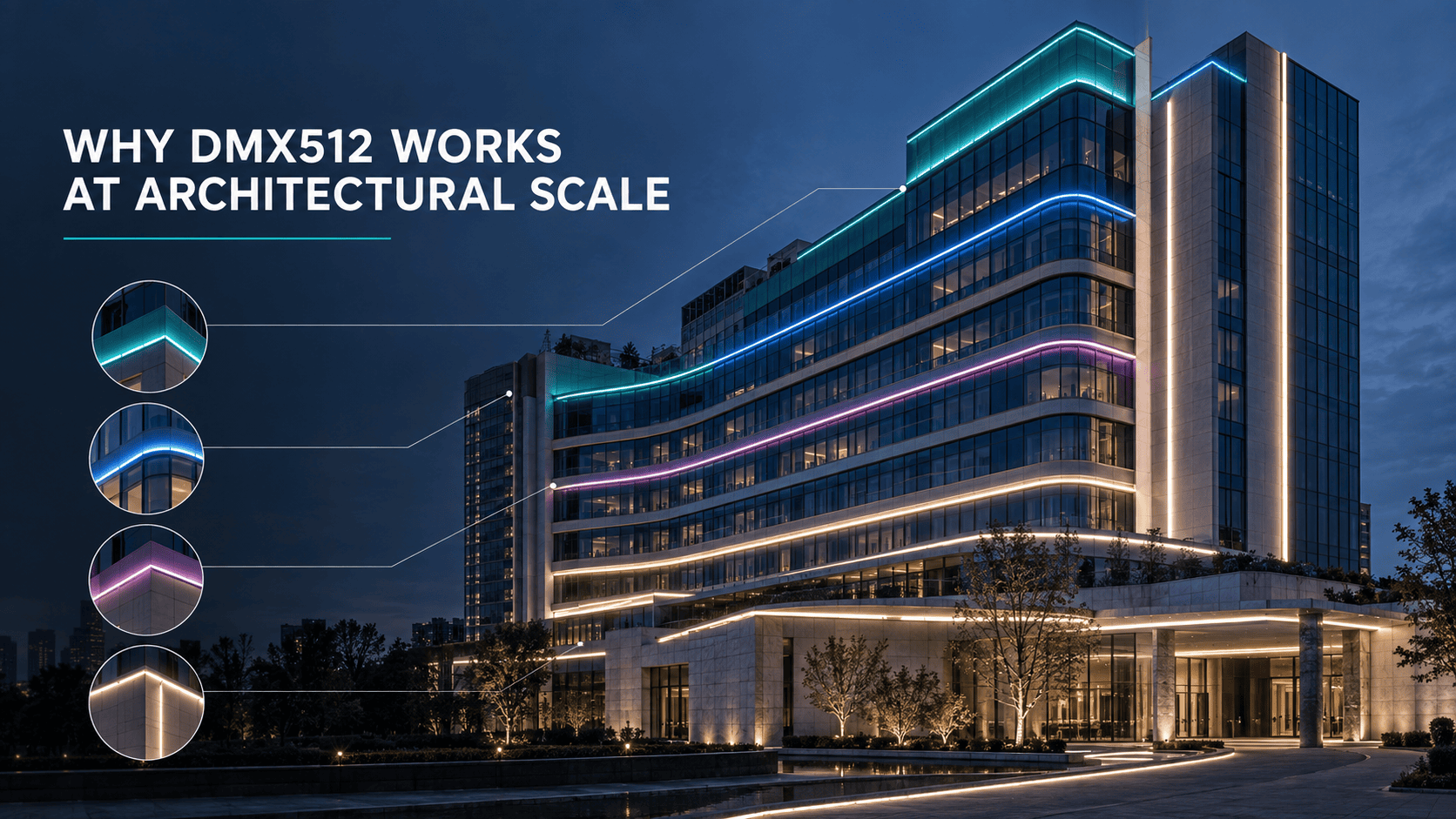

dmx512-architectural-lighting

How SPI compares

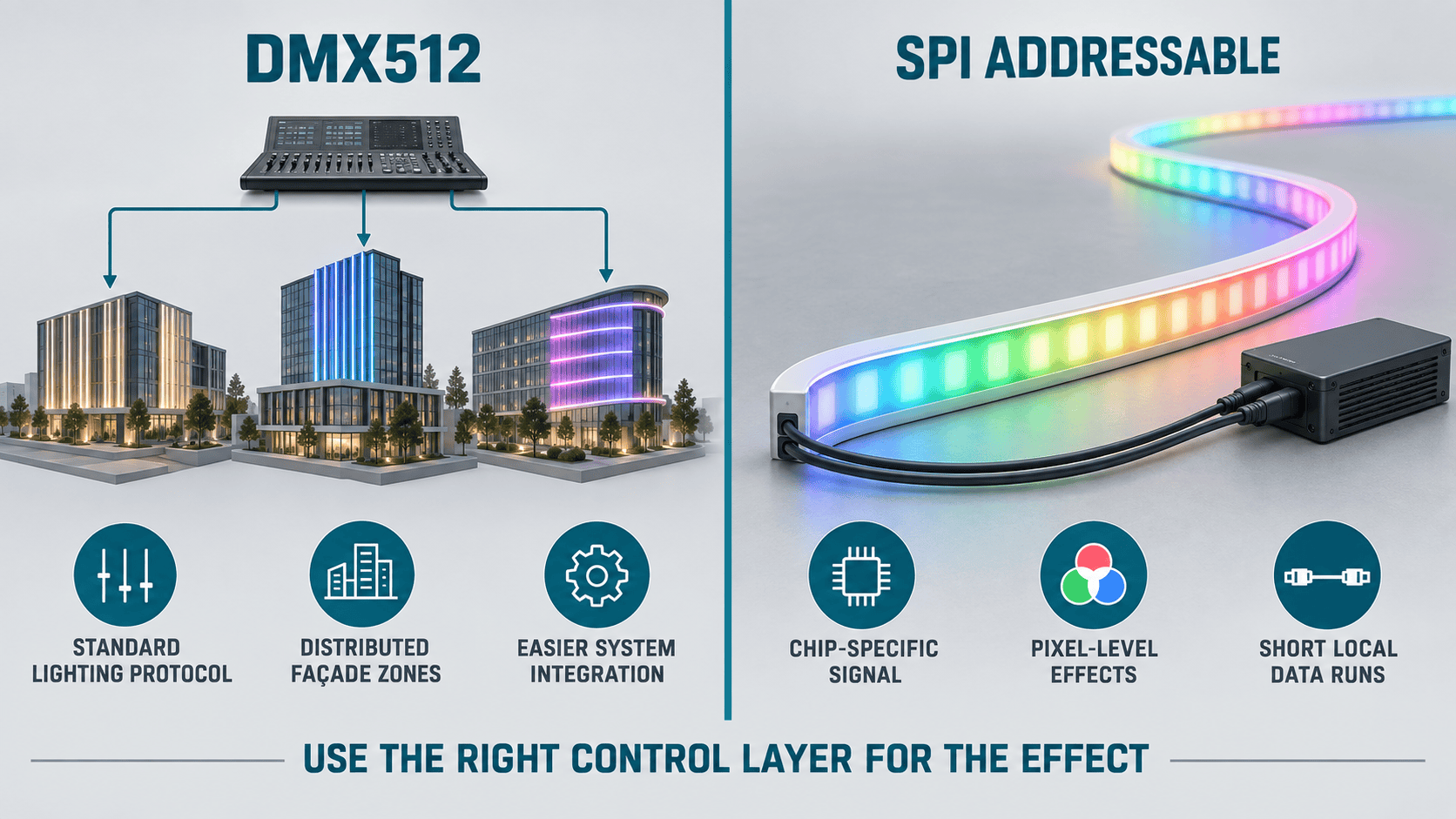
DMX and SPI get treated as rivals, but they sit at different layers. DMX512 is a standardized control network. “SPI addressable” is a market term covering the chip-level serial protocols used by products built on WS281x, UCS, TM, GS, and similar IC families. Signal format, color order, timing, voltage, and pixel behavior all vary between chipsets.

dmx512-vs-spi-comparison

Dmx 512 SPI
Purpose Professional lighting-system control Direct control of addressable LED pixels
Standardization ANSI E1.11, open Depends on the LED IC
Control level Fixture, decoder, segment, or zone Individual pixel or small pixel group
Capacity 512 channels per universe (128 RGBW zones) Depends on chipset and controller
Field cabling Differential RS-485, suited to long distributed runs Single-ended, runs need to stay short
Ecosystem Many suppliers of controllers, gateways, decoders, software Controller must match the exact chipset
Effects Zones and coordinated fixtures Dense pixel animation
Expansion More universes, Art-Net, sACN More SPI ports, controllers, injection points
Failure mode Fault is normally contained to a zone or decoder One dead IC can take out downstream pixels
Best for Large, distributed, long-life systems Short runs and high-resolution pixel effects


Where SPI is the better call

SPI wins whenever per-pixel resolution is the actual requirement: media facades, video-style animation, flowing gradients, pixel chases, interactive installations, graphic patterns, signage, entertainment venues, short decorative features.

Fixture-level cost is also lower, because the control IC is built into the strip. Price the whole system though, including controllers, data distribution, signal amplification, power injection, waterproof connectors, programming, and whatever the service call costs in year five.

What SPI runs into on a large facade

Signal distance. SPI data is designed for communication between adjacent components and consecutive pixels. Stretch the cable between controller and first pixel and you get noise, waveform distortion, and voltage-level problems. Controllers, receivers, and amplifiers have to sit close to the product.

Chipset compatibility. There is no single SPI protocol. A controller that drives one IC will not necessarily drive another. Confirm the IC model, data format, signal voltage, RGB or RGBW channel order, pixel grouping, refresh rate, pixels per port, and bypass behavior before anything is ordered. Then keep that documentation, because whoever services the building in year six will need it.

Failure behavior. Many addressable products pass data from pixel to pixel. Depending on the IC, one failed pixel or damaged data line can knock out everything downstream of it. Dual-signal and breakpoint-resume ICs reduce that risk, but verify the real behavior rather than trusting the datasheet headline.

Power and data distribution. Dense pixel work needs many injection points and several local controllers. Voltage drop, cable sizing, controller capacity, grounding, signal reference, waterproofing, and heat all need calculating. The strip looks simple. The system behind it does not.

Can DMX do pixels?

Yes, as long as the arithmetic stays in view. One universe holds 512 channels, so 170 RGB pixels or 128 RGBW pixels per universe. Large pixel facades burn through universes quickly, which is why pixel work usually moves onto Ethernet:

Media server → Art-Net or sACN → pixel controller → SPI RGB/RGBW strip

At that point the two are not competing. They are doing different jobs in the same system.

scalable-dmx512-architecture

The hybrid most projects end up with

Run DMX512 or Art-Net/sACN for building-wide control and long-distance distribution, then put decoders or pixel controllers near the fixtures and keep SPI runs short.

Use standard DMX RGBW neon for the long outlines, and reserve pixel product for the few areas where the detail actually earns its keep. Fewer channels, fewer controllers, fewer failure points, same visual impact.

RGBW needs four channels you can trust

RGB strips make color, but the white they mix is rarely acceptable for architecture. A dedicated white channel gives you saturated color, pastels, low-saturation tones, and usable functional light from the same fixture.

DMX controls all four channels independently. A hotel can run warm white on an ordinary Tuesday and switch to brand or event colors in seconds, without installing a second lighting system

dmx512 control for architectural lighting Neon

Frequently Asked Questions

  1. Does the design need control by fixture, by segment, or by individual pixel?
  2. How many RGB or RGBW channels does that add up to?
  3. How many DMX universes will the finished project consume?
  4. What is the distance from the central controller to each zone?
  5. Where can gateways, decoders, and pixel controllers physically go, and can anyone reach them later?
  6. Which network protocol: DMX, Art-Net, sACN, or a mix?
  7. Does the equipment support RDM?
  8. Which SPI chipset, and is the controller fully compatible with it?
  9. How will power injection and voltage drop be handled?
  10. What happens if one pixel, decoder, controller, or data cable fails?
  11. Are the connectors and signal joints rated for outdoor use?
  12. Who programs, commissions, and maintains this, and will they get wiring diagrams, address schedules, and show files at handover?

Answer these before fixtures go into production. Changing control strategy after the neon is fixed to the building is expensive and slow.

So which one

Pick DMX512 RGBW neon when you need reliable control across distributed zones, compatibility with professional lighting gear, coordinated scene control, straightforward commissioning, and Art-Net or sACN integration.

Pick SPI addressable neon or strip when you need individual-pixel control, high-resolution flowing effects, video-style animation, or complex chases on short, well-managed runs.

Pick a hybrid when the building needs both: system-wide reliability, with detailed pixel animation in selected areas.

DMX512 is common on large facades because it solves more than color changing. It gives designers, installers, programmers, and operators a shared structure for the full life of the system. SPI gives resolution and creative freedom, and asks for closer attention to chipset matching, signal distance, data distribution, and failure modes in return.

Decide on the required effect, the scale, the control distances, the maintenance plan, and the expected service life. Not on which demo video looked better at the trade show.

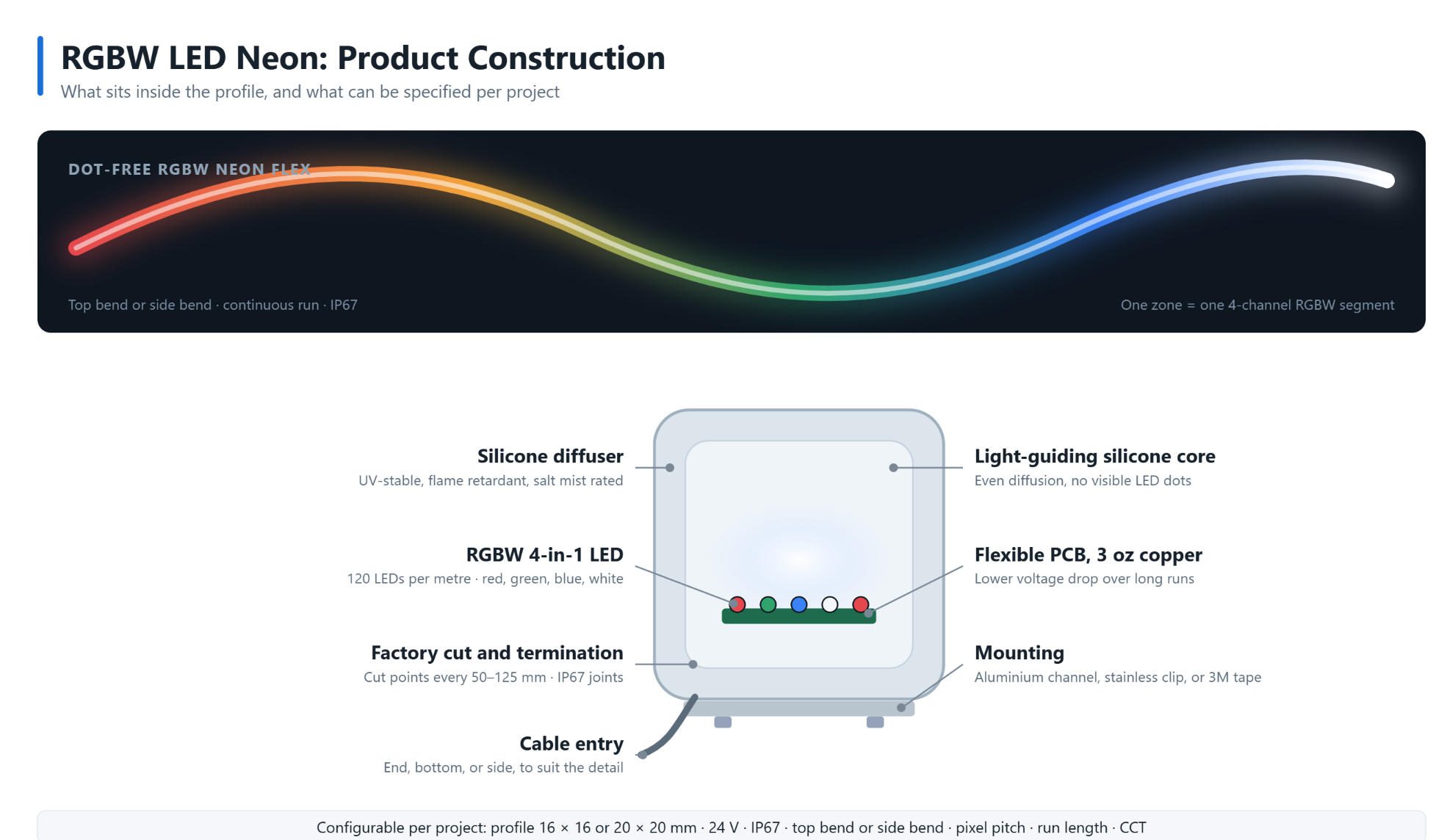
At LUMIWISE we build custom RGBW and pixel-addressable LED neon for facade and landscape projects. Dimensions, bend direction, pixel pitch, cable entry, connectors, protocol, power, CCT, and run length are all configurable. Send us the drawings and the zone schedule, and we will tell you which control architecture fits before you commit to production.

Related Posts

REQUEST A QUOTE

9 * 2 = ?
Reload

Bitte geben Sie die im CAPTCHA angezeigten Zeichen ein, um sicherzustellen, dass Sie ein Mensch sind.

WhatsApp
WhatsApp Me
WhatsApp QR Code
(0/8)

Request A Quote

9 + 3 = ?
Reload

Bitte geben Sie die im CAPTCHA angezeigten Zeichen ein, um sicherzustellen, dass Sie ein Mensch sind.

*We respect your confidentiality and all information are protected.